After we mastered basic vocabulary and pinyin, I had a hard time finding structured, level-appropriate Chinese reading material for my kids and me to practice on. Books from the library would have too many difficult characters. Even if they had pinyin printed alongside, we’d still have to look up the words one by one. There may have been some proprietary software or website options, but as casual learners, I hadn’t dared to commit. I struggled with this for a few years and then just this year, I discovered how AI and technology have transformed our options.
Below are three free online resources that I’ve found to be very helpful for the learning phase that we are in. They focus specifically on improving reading fluency, building vocabulary in context, and practicing hearing and reading out loud for beginner-intermediate learners.
Resource #1: HSK Reading — Bite-Sized, Level-Appropriate Articles
HSK Reading is a site that organizes short reading passages by HSK level (the standardized Chinese proficiency test levels 1 through 6).
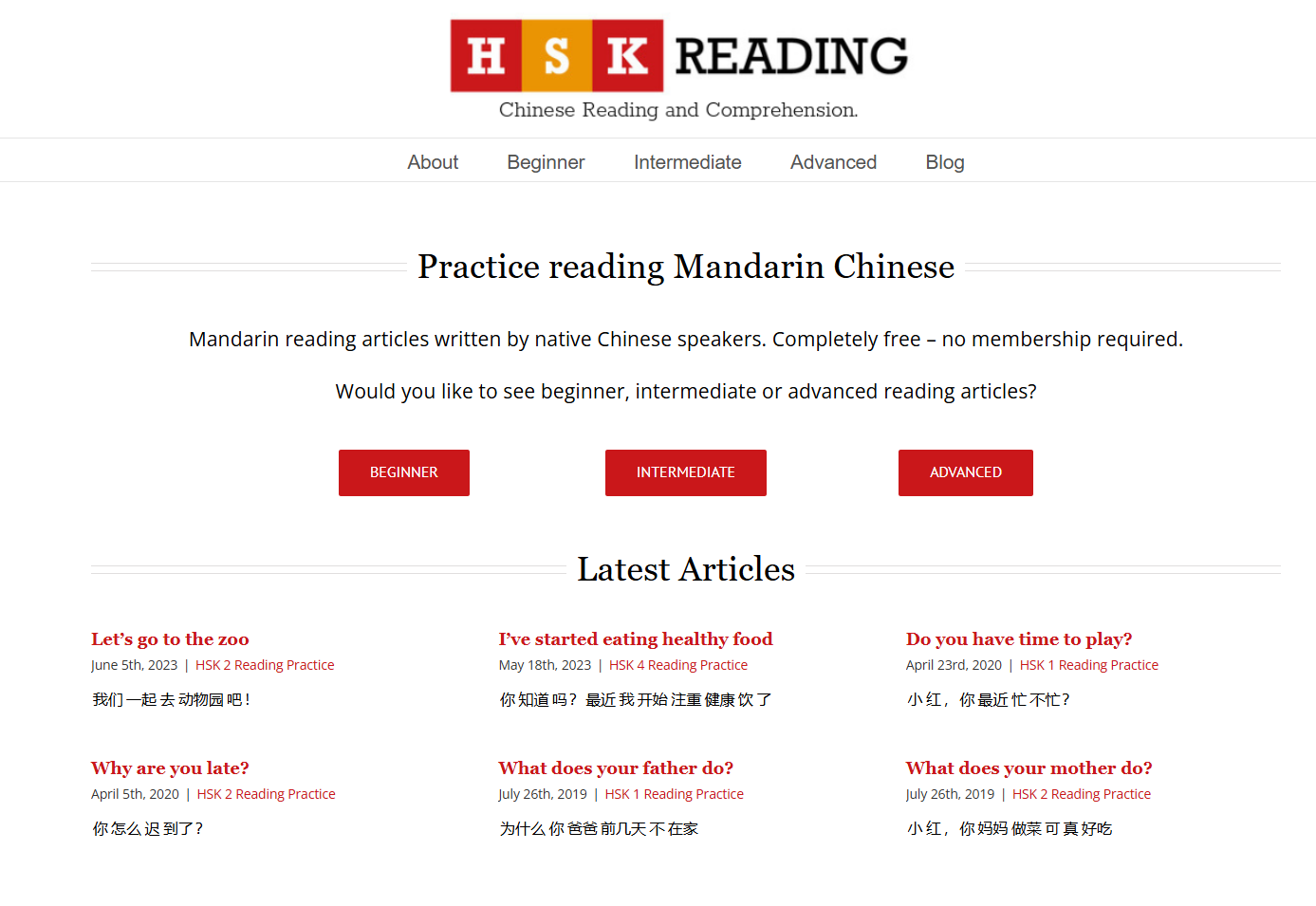
Key features:
- Manageable length: The short passages take only a few minutes to read, making them ideal for painless daily practice.
- Supportive functionality: You can hover over unfamiliar characters for instant English definitions and toggle pinyin on or off depending on whether you need a safety net or don’t have time to look them up yourself. Some passages also provide audio.
- Comprehension check: Most passages include short quizzes at the end to make sure they generally understood what they read. Many passages also include an option to read a full English translation to check your full understanding.
Resource #2: Chinese Reading Practice — Real-World Stories & Culture
Similar to HSK Reading, Chinese Reading Practice offers a range of material categorized stories by difficulty (Beginner, Intermediate, Advanced). The material includes everything from folk tales and pop culture snippets to news stories and translated jokes.
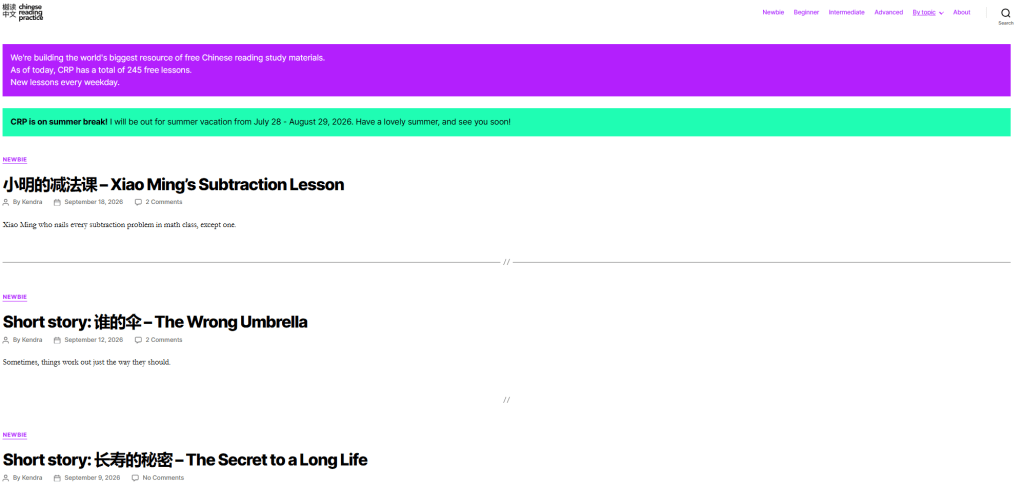
Key features:
- Engaging variety: Content feels more relevant for older kids and pre-teens who want interesting topics rather than repetitive children’s dialogues.
- Supportive functionality: Just like HSK Reading, this site features hover over pinyin and definitions along with optional English translations that let learners check their understanding without needing to stop and look up every word in an external dictionary app like Pleco. It also has a section called Key Vocab that provides a quick guide to words the reader might not be familiar with.
- Natural phrasing: Exposes intermediate students to authentic sentence structures and idioms that don’t always appear in standard curricula.
Resource #3: Speecher.org (Chinese Tool) — Reading Out Loud with AI Audio & Feedback
We’ve been pairing our reading practice with a free AI reader, Speecher.org to help us hear the text out loud as we still very much need help with pronunciation and tone control. While the AI reading is not perfect, it’s pretty close and certainly better than the kids relying on me to read the text correctly! The app provides all kinds of language options, but we only use Chinese at the moment.
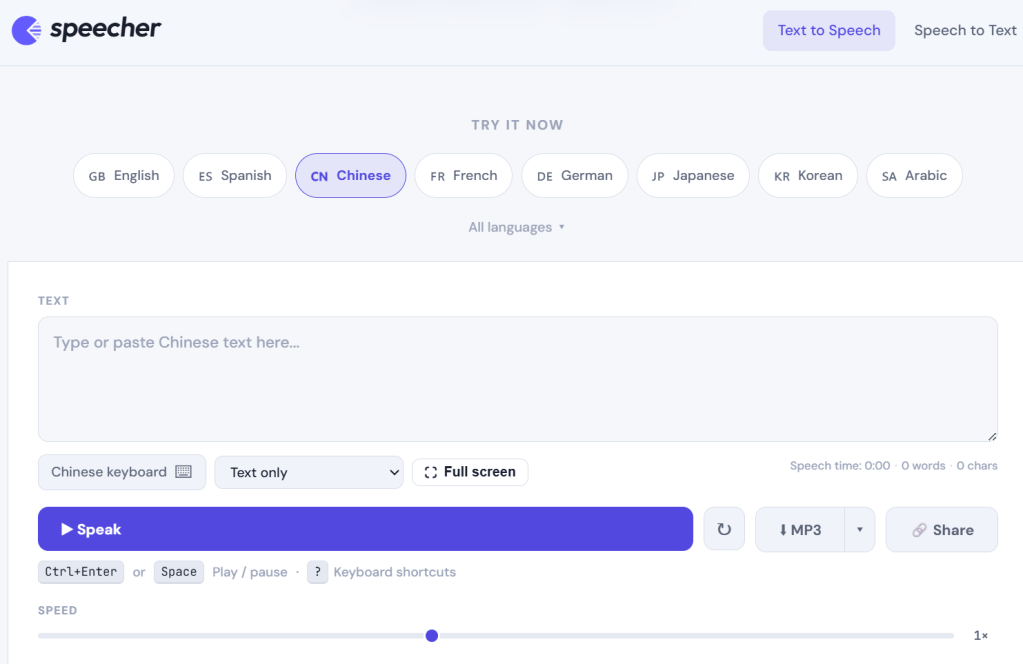
Key features:
- Flexibility – Paste in any Chinese passage—including articles found on the sites above—and listen to clear, natural text-to-speech audio.
- Granular control – Adjust the speed of the reader as well as the length of pauses between sentences and paragraphs.
I imagine there will be or perhaps already are other sites that provide these same features as above. It’s amazing how technology has increasingly facilitated language learning. If you’ve found any other great sites for intermediate Chinese learners, let me know in the comments below!


[…] Best Free Reading Resources for Intermediate Chinese Learners – Things I wish I knew before. .… says: October 2, 2026 at 2:08 pm […]
LikeLike